What Termite Droppings Look Like
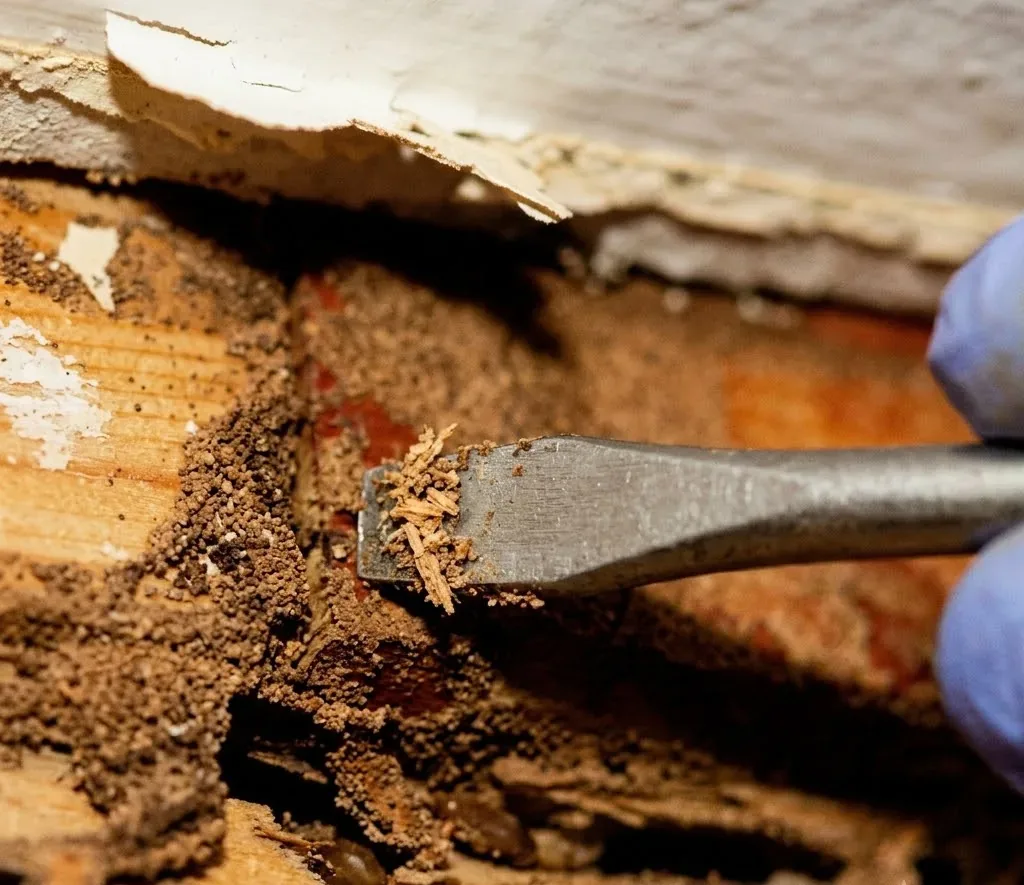
Termite droppings, often called drywood termite frass, are usually tiny, hard pellets rather than a soft cloud of powder. They may look like grains with distinct edges, and their color can vary with the wood. A small pile beneath a narrow opening in wood deserves a closer look, but appearance alone cannot confirm termites. In Rio Rancho, a homeowner near Kuaua Pueblo can photograph the material and its position before cleaning it up; an inspection can help determine what produced it.
A common mistake is treating every speck of wood-colored debris as termite droppings. Drywood termite frass tends to collect as a neat scatter of similar pellets, while general dust is finer and less uniform. Still, paint chips, dirt, and crumbs can imitate parts of that pattern. A close photo beside an ordinary object for scale can preserve useful detail. In Rio Rancho, note whether the pile sits directly below wood or is mixed with other material, then let an inspection guide the next step.
Where Pellet Piles May Gather
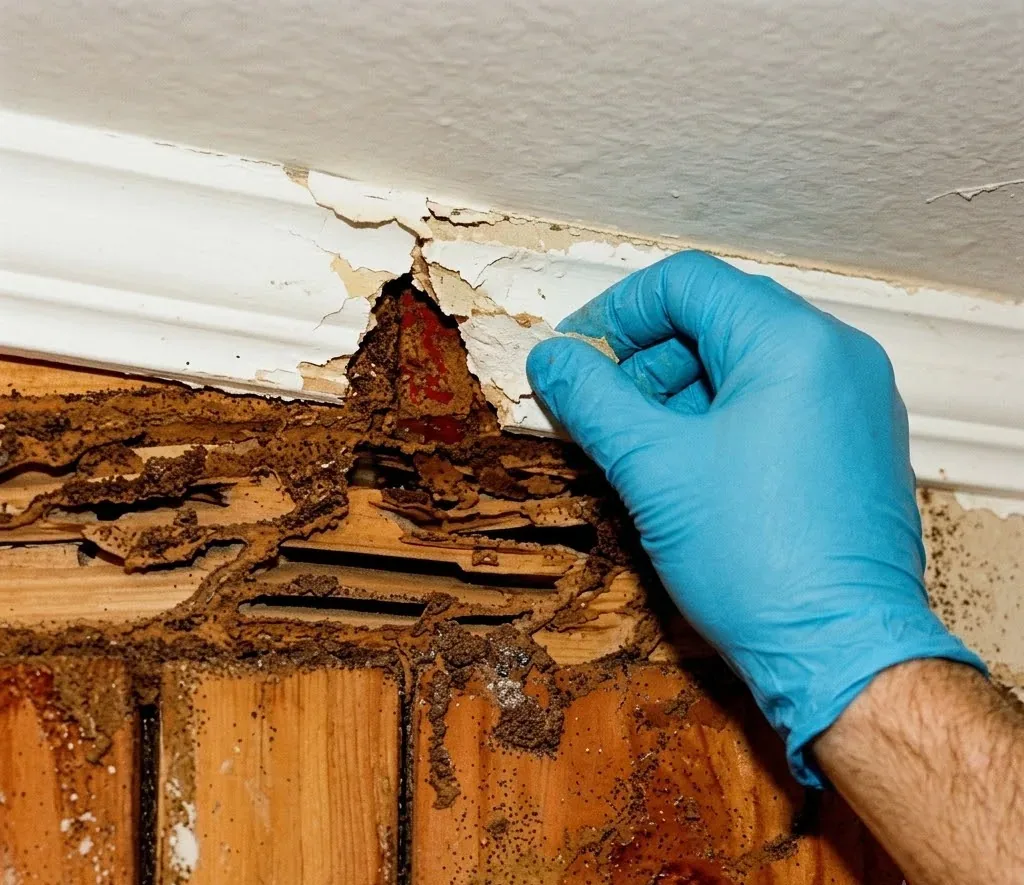
Small piles may appear below trim, window frames, door frames, or other wood; frass can fall from a small opening and gather on a sill or floor. That location is a clue, not proof, because ordinary debris also settles along edges. Drywood termites live within wood and do not need soil contact, so a pellet pile indoors should not be dismissed simply because it is far from the ground. For a Rio Rancho owner near Bernalillo, photograph the pile and the nearby wood together.
The pile’s shape and setting matter more than a quick glance at color. Several similar pellets gathered beneath wood are more suggestive of frass than a broad film of fine dust, but sanding, drilling, and crumbling materials can leave confusing lookalikes. Avoid scraping at a suspected opening to see what lies behind it; that can scatter evidence and make the source harder to assess. A homeowner in Rio Rancho near the Larry P. Abraham Agri-Nature Center can record the room and exact spot before seeking an inspection.
Frass Compared With Sawdust
Sawdust is generally irregular flakes and fibers from cutting or wear, while drywood termite frass is made of small, fairly consistent pellets. Fine dust alone is weak evidence: it can come from household work, deteriorating materials, or tracked-in grit. Check whether the particles repeat in size and form, and whether they gather under a piece of wood rather than across a work surface. In Rio Rancho, a photo near Abraham Agri can help an independent professional compare the material without relying on a guess from color.
Do not vacuum or sweep a suspicious pile before documenting it. Save a clear image of the whole area and a close view of the particles; include nearby wood and any small opening without probing it. This preserves context that can be lost when debris is moved or mixed with routine cleaning dust. The owner can also note when and where it was first noticed, without deciding what it means. For a Rio Rancho home near Los Ranchos de Albuquerque, those simple records give an inspector a more useful starting point.
Document Pellets Before Inspection
A photograph can narrow possibilities, but it cannot establish an infestation by itself. If pellets repeatedly appear beneath wood or the material remains unexplained, ask an independent local professional to inspect; the pros we connect you with can be one option. Describe the location and show the images rather than presenting a conclusion as fact. In Rio Rancho, an inspection can assess the suspected source and relevant property conditions. Treatment decisions should follow those findings, since a wrong guess can lead to unnecessary work or leave the actual source unaddressed.
Before anyone recommends treatment, ask what the inspection found and how the proposed work addresses the suspected frass source. A confident claim based only on a photo is not enough to show what is present or which method fits the property. Keep the photographs and request written findings so the owner can compare the explanation with the observed material. For a Rio Rancho homeowner near Edgewood/Osuna Park, that pause helps avoid authorizing a treatment before the evidence has been assessed. Leave suspected pellets undisturbed until the inspection.
Dealing with termite signs at your home?
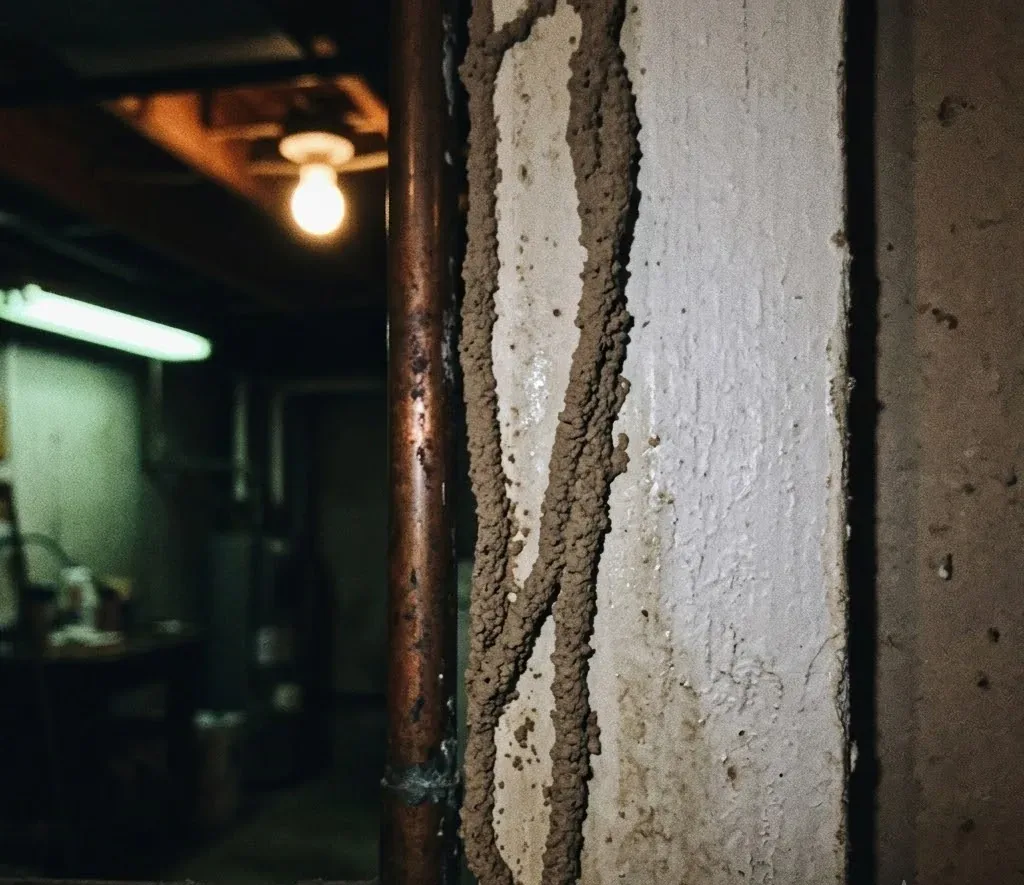
Leave suspected activity intact; do not pry, scrape, or spray it. Keep the area open for inspection, and note anything you cannot safely access. Inspection notes should describe the feature, not rely on a landmark: a homeowner near Edgewood/Osuna Park might mark a tube at a foundation seam; near Hartnett Park, wings at a window; near the Nature Center, wood touching soil. Ask whether the inspection will include nearby areas beyond the spot where the sign appeared. Request written findings and discuss any proposed treatment before deciding.