Compare Body Shape and Antennae
A winged insect indoors can look alike at a glance, and guessing wrong can send a Rio Rancho homeowner toward the wrong response. Start with the body: termites tend to have a broad, even shape, while carpenter ants have a pinched waist. Their antennae also differ. Then compare the wings and the wood evidence. Seasonal weather can affect what a homeowner notices, but neither a warm spell nor a damp area identifies the insect. Clear photos and a closer inspection help settle the question.
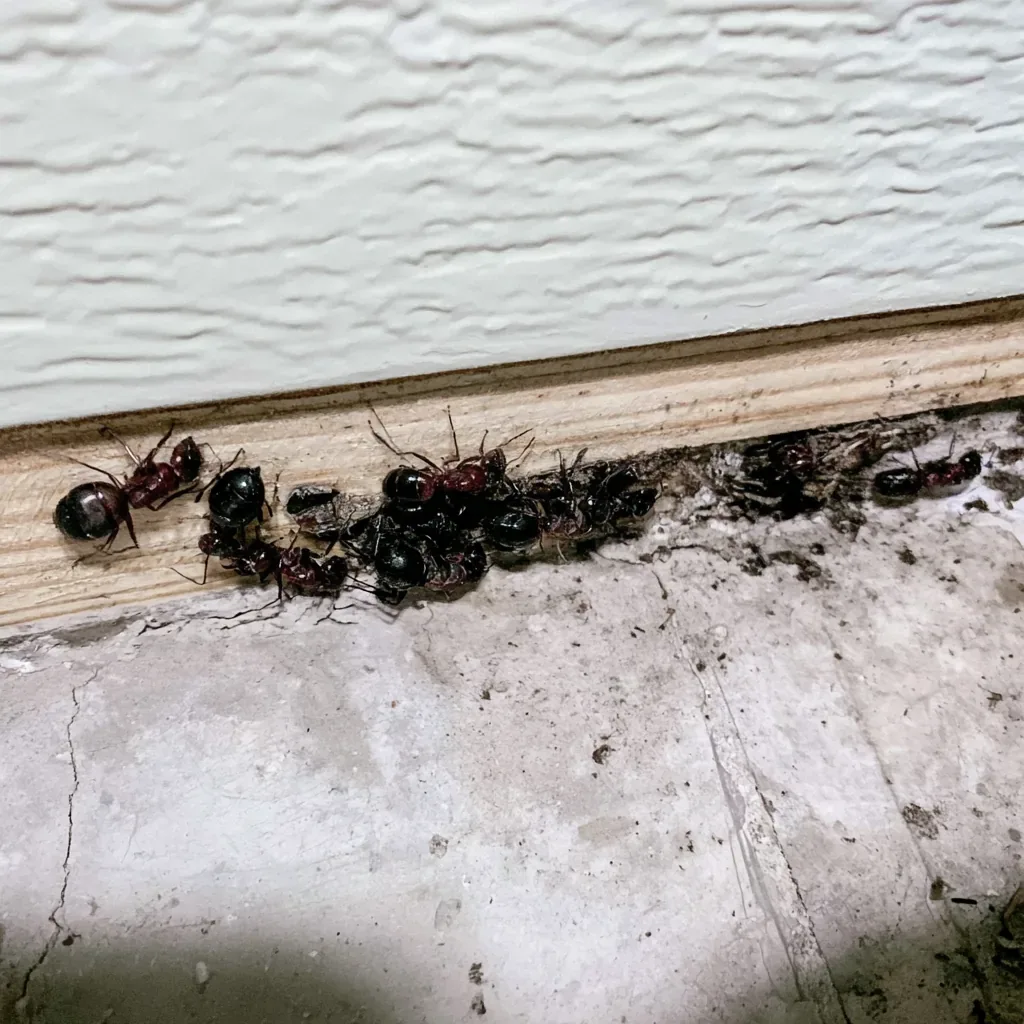
Look at the antennae from the side if a photo is sharp enough. Termite antennae appear straight and beadlike; carpenter ant antennae bend at an angle. Carpenter ants also have a narrow waist between body sections, while termites do not show that pinch. Size and color can vary, so one feature alone may mislead. In Rio Rancho, record where the insect appeared and whether it had wings. A photo that shows the full body is more useful than a close crop of just the head.
Use Wings as a Second Clue
Wings add another clue, especially when a homeowner finds several insects at once. Termite swarmers have two pairs of wings that are similar in length; carpenter ant swarmers have front wings longer than the hind pair. A dropped wing by itself can be hard to identify, so photograph it beside the insect if both are available. Searchers may call this a termite or ant wings question, but the shape of the body and antennae still matters. In Rio Rancho, keep the specimen undisturbed for a clearer comparison.
As fall weather shifts around Rio Rancho, a warm day or moisture near wood may change what an owner notices, but it cannot confirm termites or ants. The region's dry conditions do not rule out termite activity; moisture beside wood can support conditions favorable to it. A house's location relative to Corrales or Albuquerque does not settle the identification either. Note the date and place of the sighting, then compare several clues rather than treating the season or setting as a diagnosis.
Read the Evidence in Wood
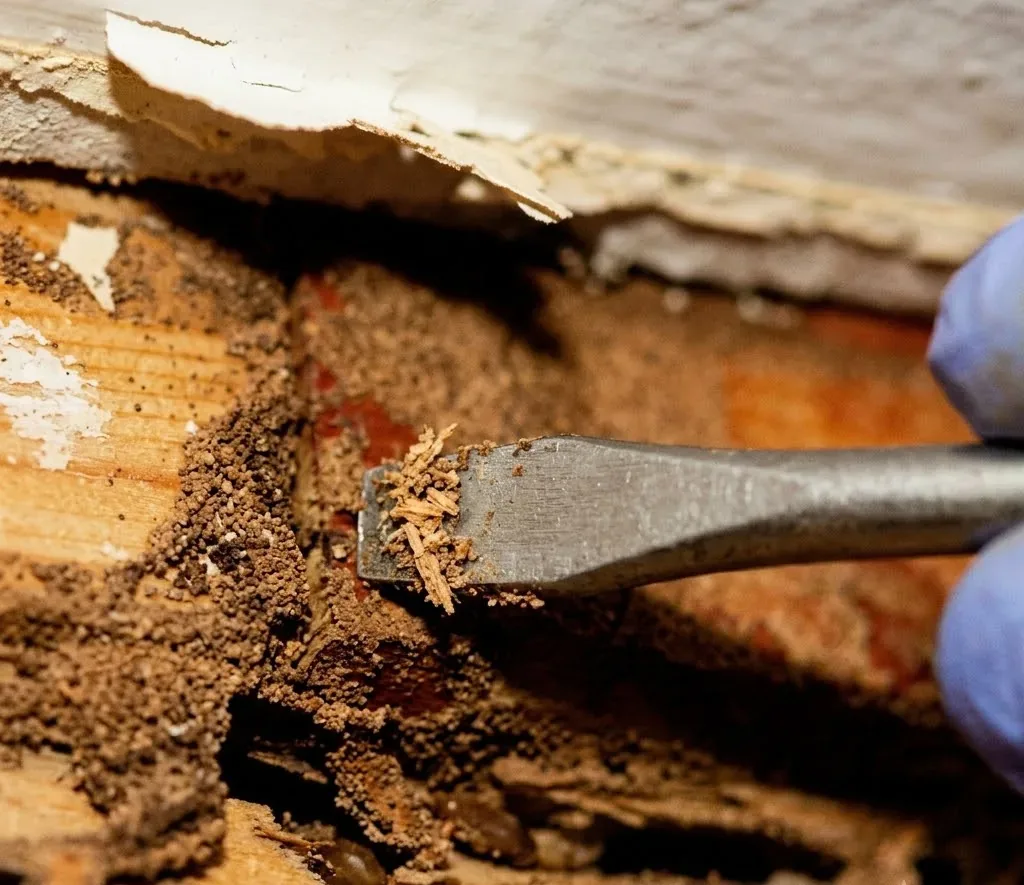
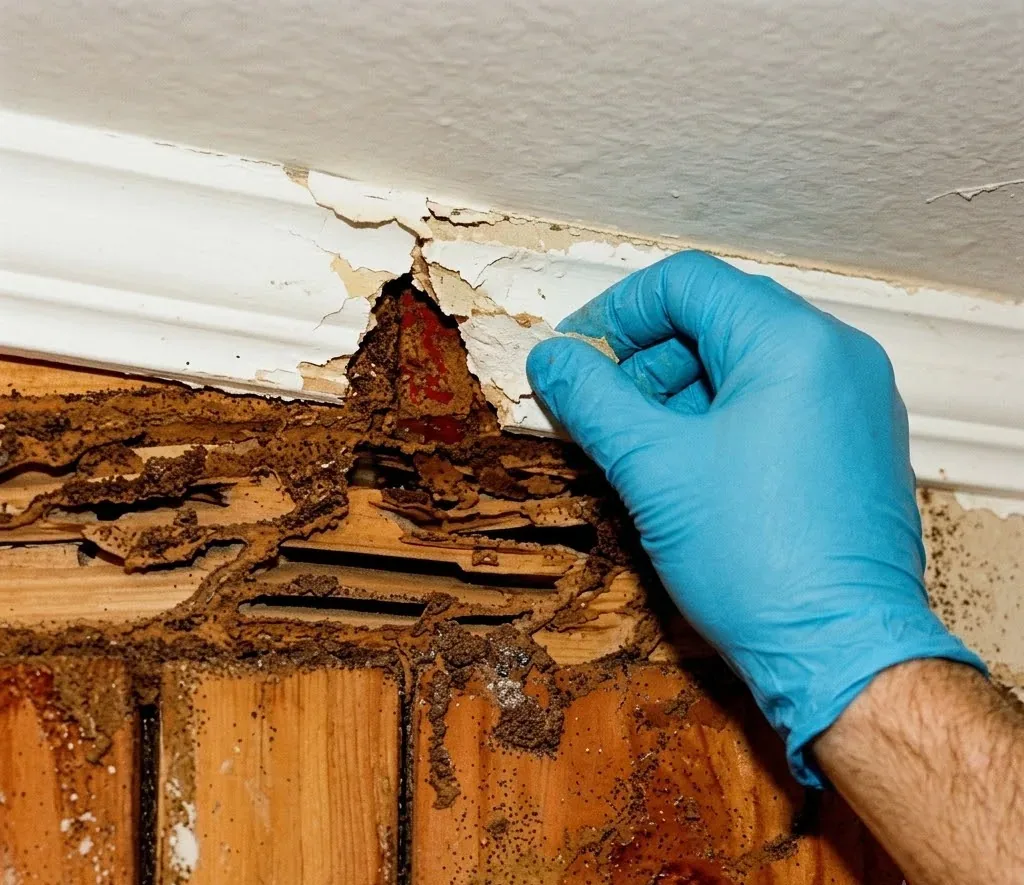
Wood evidence can narrow the possibilities. Termites consume wood and other cellulose materials, and damage may be hidden inside a wall or other concealed space. Carpenter ants excavate galleries in wood for nesting; they do not eat the wood. Their activity may leave coarse wood fragments near an opening. A clean surface does not prove the structure is sound, and loose material alone does not identify the insect. In a Rio Rancho home, photograph the area before cleaning or opening it so an independent local pro can assess what is visible.
The setting around the wood matters, too. The insect's relationship to the wood can offer a clue separate from the surrounding conditions. Carpenter ants are associated with wood they use for nesting. These differences help explain why an inspection should consider both the insect and the affected material. For a Rio Rancho property, note nearby moisture or wood touching soil, but leave the diagnosis to the evidence rather than assuming one kind of pest from the location alone.
Know When Identification Is Unclear
Sometimes the insect is crushed, the wings are gone, or the photo is too blurred to show a waist or antennae. That leaves the answer uncertain. Do not pry into a wall, spray the suspected area, or discard the insect before documenting it; disturbing the evidence can make identification harder. Take a close photo and a wider one showing where it was found. A homeowner near Larry P. Abraham Agri-Nature Center still needs the same evidence as any other Rio Rancho homeowner: the insect, the wood, and the conditions around it.
Record whether the concern is visible insect activity, suspected damage, or both. In New Mexico, termite work calls for appropriately licensed professionals, so ask about the provider's relevant qualifications before arranging service. An inspection can distinguish signs from a confirmed infestation and guide what should happen next. If the evidence points to termites, the property conditions and findings shape the response; if it points to carpenter ants, the inspection can clarify the extent of their activity.
Dealing with termite signs at your home?
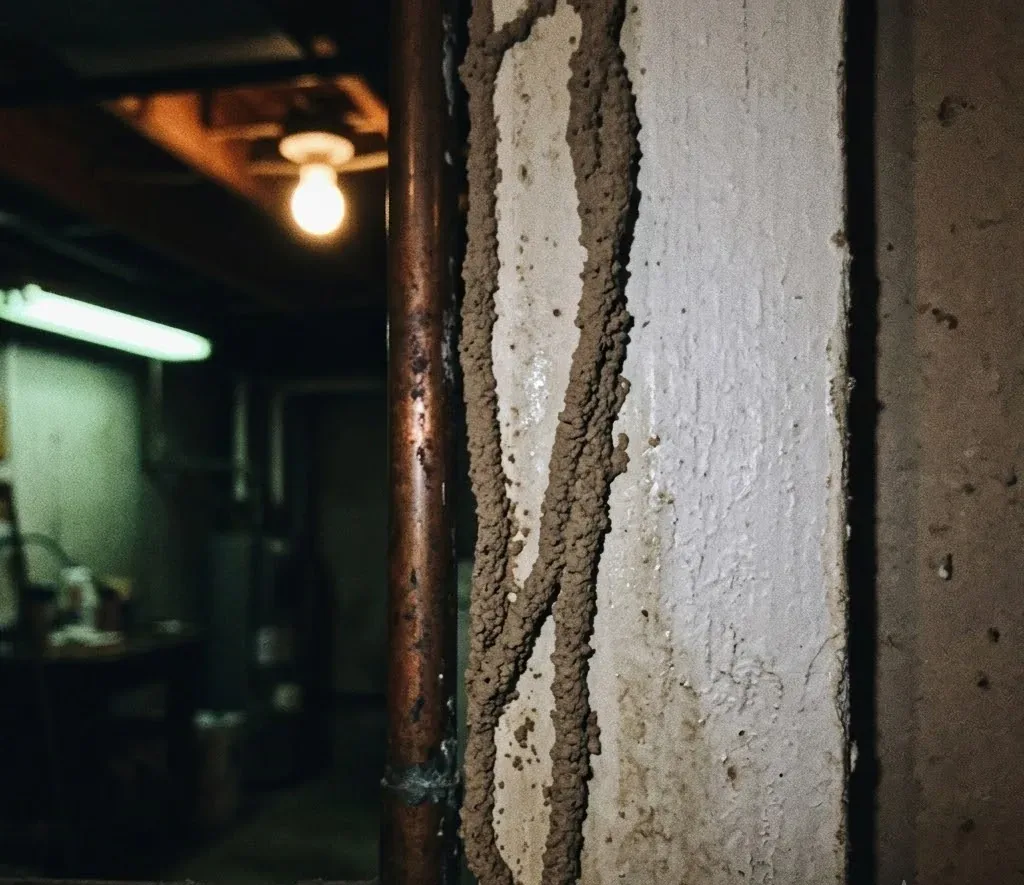
Leave suspected activity intact; do not pry, scrape, or spray it. Keep the area open for inspection, and note anything you cannot safely access. Inspection notes should describe the feature, not rely on a landmark: a homeowner near Edgewood/Osuna Park might mark a tube at a foundation seam; near Hartnett Park, wings at a window; near the Nature Center, wood touching soil. Ask whether the inspection will include nearby areas beyond the spot where the sign appeared. Request written findings and discuss any proposed treatment before deciding.